


How Patient Advocacy Is Shaping the Future of Kidney Care
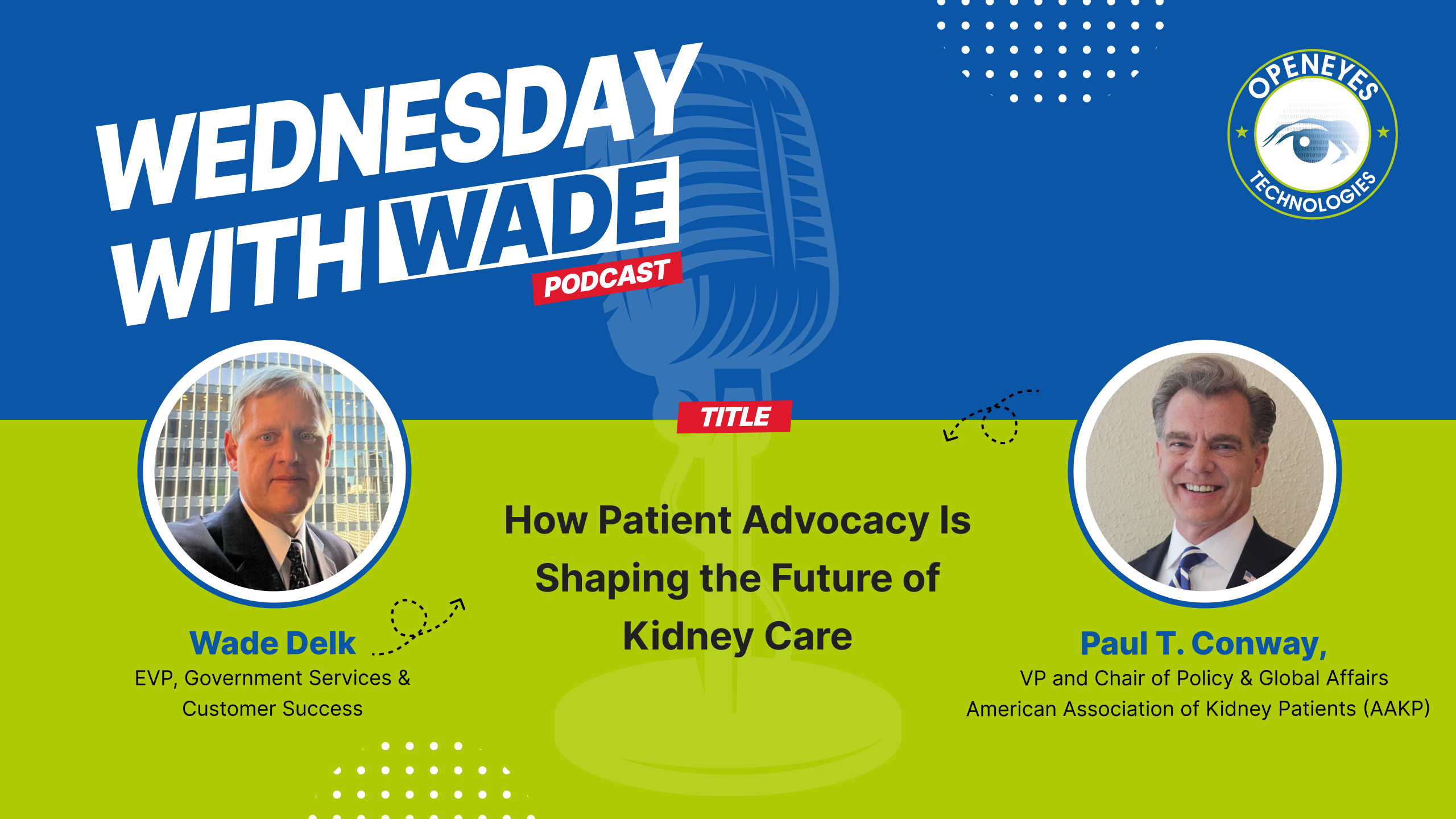
In this episode of Wednesday With Wade, Wade Delk, EVP of Government Services and Customer Success at OpenEyes Technologies, welcomes Paul T. Conway, Vice President and Chair of Policy & Global Affairs at the American Association of Kidney Patients (AAKP), former Chief of Staff at the U.S. Department of Labor, and a kidney transplant recipient, for a compelling conversation on how patient advocacy, healthcare policy, and medical innovation are transforming organ transplantion.
Drawing on decades of experience as both a patient and policy leader, Paul shares how kidney patients have shaped national healthcare policy, why early detection remains one of healthcare’s greatest opportunities, and how government decisions continue to influence patient outcomes.
This conversation explores the history behind one of America’s most impactful healthcare programs, the future of kidney transplantation, and why the patient voice remains essential in driving meaningful change across healthcare.
- How Patient Advocacy Is Shaping the Future of Kidney Care 19:00
How Patient Advocacy Changed Kidney Care in America
The American Association of Kidney Patients (AAKP) has one of the most remarkable stories in healthcare advocacy.
Founded in 1969 by six dialysis patients in the basement of Kings County Hospital in New York, the organization was built on a simple mission: ensuring everyone facing kidney failure had access to life-saving treatment.
Those six patients didn’t simply raise awareness; they successfully influenced national policy. Their efforts ultimately contributed to the landmark legislation signed in 1972 that made Medicare coverage available for dialysis and kidney transplantation regardless of age for patients with end-stage renal disease. Today, millions of Americans have benefited from a policy that began with patients advocating for one another.
For Paul, this history demonstrates that some of the most significant healthcare reforms begin when patients are willing to speak up and share their experiences.
Early Detection Can Change the Course of a Life
Paul’s personal journey reinforces the importance of early diagnosis.
At just 16 years old, a routine sports physical revealed that he had kidney disease; a diagnosis made possible because his physician routinely screened every student for kidney health. Years later, he experienced kidney failure, completed three years of home dialysis, and has now lived with a successful kidney transplant for nearly three decades.
His story illustrates how early detection creates opportunities for intervention long before irreversible damage occurs. As new therapies continue to emerge, identifying kidney disease earlier has the potential to slow progression, improve quality of life, and reduce the need for dialysis or transplantation altogether.
Government Policy Plays a Bigger Role Than Many Realize
One of the most thought-provoking discussions throughout the episode centers around what Paul calls Government Determinants Of Health (GDOH).
While healthcare conversations frequently focus on social determinants of health, Paul argues that government decisions deserve equal attention. Regulatory approvals, reimbursement policies, clinical trial requirements, and healthcare funding all directly affect whether patients gain timely access to innovative treatments.
Using kidney transplantation as an example, he explains that outdated regulatory processes can unintentionally delay medical progress, while modernized policies have the potential to accelerate the development of safer, longer-lasting transplant therapies.
Throughout the conversation, Wade and Paul emphasize that patients must have a seat at the table when healthcare decisions are being made.
The Future of Kidney Transplantation Is Closer Than Ever
Medical innovation is opening entirely new possibilities for kidney care.
Paul discusses several groundbreaking developments currently reshaping the field, including:
- Xenotransplantation, using genetically modified animal organs to address donor shortages.
- Artificial implantable kidneys and “kidney-on-a-chip” technologies that could one day replicate kidney function without traditional dialysis.
- New generations of transplant medications designed to improve long-term outcomes while reducing harmful side effects associated with current immunosuppressive therapies.
These innovations represent significant progress, but their success depends on healthcare systems and regulatory agencies keeping pace with scientific advancement.
Prevention Should Be the First Line of Healthcare
Another major takeaway from the conversation is the need to prioritize prevention over treatment.
Although medicine now offers therapies capable of slowing down kidney disease progression, screening remains underutilized. As a result, many patients are diagnosed only after substantial kidney damage has already occurred.
Paul argues that expanding access to routine kidney screening would benefit everyone. Earlier diagnosis not only improves patient outcomes but also reduces healthcare costs, decreases dependence on dialysis, and lowers the overall burden on healthcare systems.
The discussion highlights a simple but powerful truth: preventing disease is often far more effective than treating it later.
The Unsung Heroes of Transplantation
The episode also shines a spotlight on transplant coordinators, whose work is critical to every successful transplant journey.
These healthcare professionals support donors, recipients, and families through one of the most emotional and complex experiences they may ever face. Their expertise, compassion, and coordination help patients navigate every stage of the transplant process.
Wade recognizes transplant coordinators as true champions of patient care, acknowledging the essential role they play behind the scenes every day.
Everyone Has a Role to Play
Advocacy isn’t limited to policymakers or healthcare organizations.
Paul encourages individuals to become involved in whatever way they can, whether by registering as an organ donor, supporting kidney health organizations, participating in community awareness events, encouraging routine screening, or engaging with elected representatives on issues that affect patients.
Collective action, he explains, has always been one of the strongest drivers of healthcare progress.
Innovation Requires More Than Scientific Breakthroughs
One of the clearest messages from this conversation is that innovation alone does not improve healthcare.
Scientific discoveries must be supported by informed public policy, patient advocacy, healthcare professionals, and organizations willing to champion meaningful change.
As kidney care continues to evolve, collaboration between researchers, regulators, clinicians, and patients will become even more important in ensuring new treatments reach those who need them most.
Final Thought: Patients Continue to Lead the Way
The future of kidney care is being shaped by extraordinary advances in medicine, but equally by patients who refuse to accept the status quo.
From expanding access to transplantation and encouraging early detection to influencing healthcare policy and accelerating innovation, patient advocacy remains one of the most powerful forces driving progress.
As Paul’s story demonstrates, lasting change begins when people are willing to use their experiences to improve the lives of others.
Listen to the Full Episode
Join Wade Delk and Paul T. Conway for a thoughtful conversation on patient advocacy, healthcare policy, transplantation, and the innovations shaping the future of kidney care.
Whether you are a healthcare leader, policymaker, clinician, transplant professional, patient advocate, or simply interested in the future of healthcare, this episode offers valuable insights into how collaboration, innovation, and patient voices continue to transform lives.