


What It Really Takes to Change an Organization’s Name
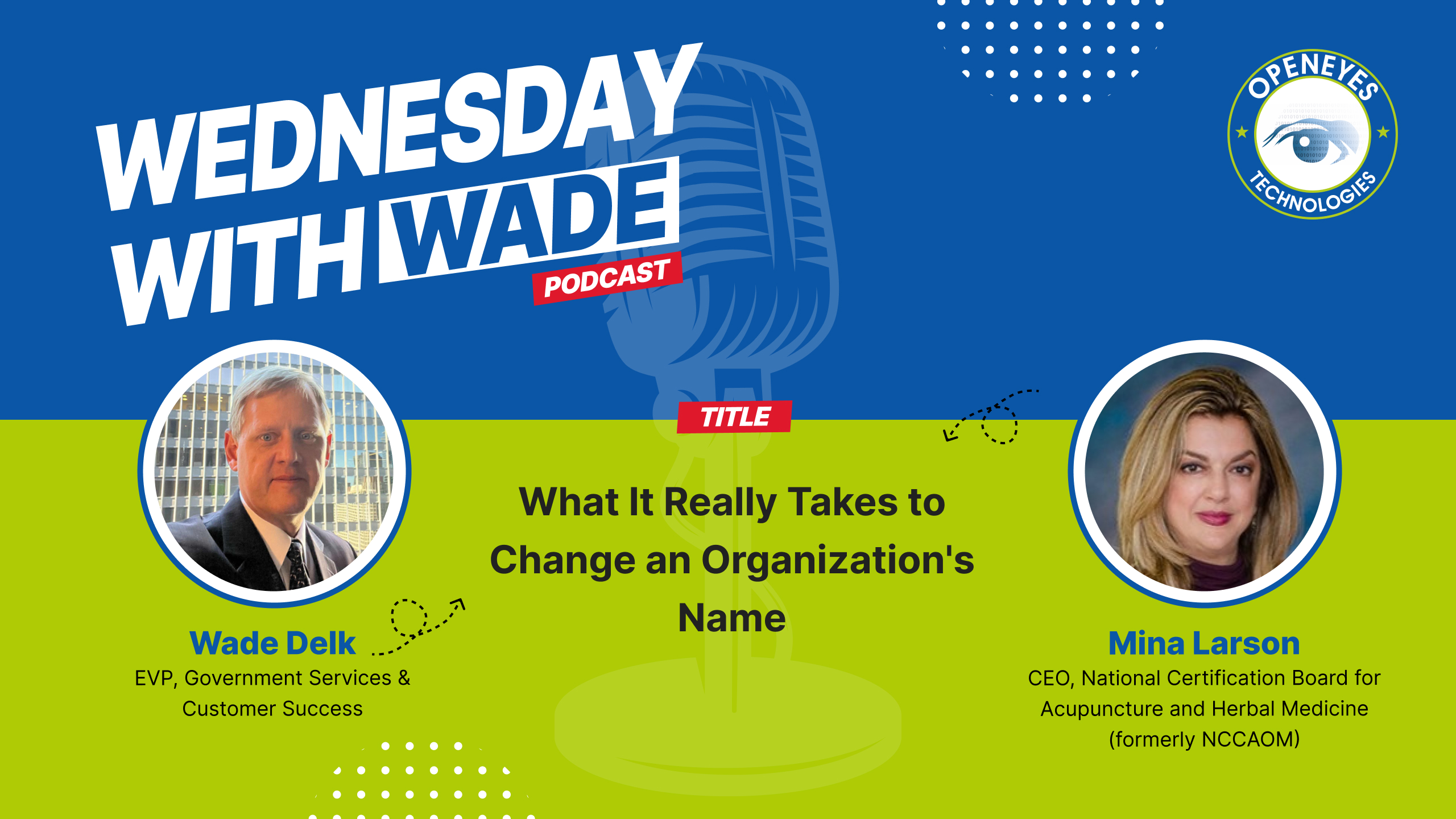
In this episode of Wednesday With Wade, Wade Delk, EVP of Government Services and Customer Success at OpenEyes Technologies, welcomes Mina Larson, CEO of the National Certification Board for Acupuncture and Herbal Medicine (formerly NCCAOM).
What sounds like a simple rebrand quickly unfolds into something much bigger: a multi-year transformation involving legal review, stakeholder alignment, and industry-wide coordination.
- What It Really Takes to Change an Organization's Name 22:27
Why a Name Change Was Necessary
For years, Mina and her organization had been evaluating whether their name still reflected the profession they serve. The term “Oriental Medicine” created confusion among the public and did not fully represent the scope of practice.
As Mina explains:
“There was some confusion about what Oriental medicine meant from the public… what is it specifically, what does it do?”
To address this, the organization turned to its community, gathering input from practitioners, students, regulators, and stakeholders. The response made the direction clear.
When a Name Is Embedded Everywhere
This wasn’t a surface-level brand change. The organization’s name was deeply integrated into regulatory and professional systems across the country, including 46 state frameworks. That level of integration made the change significantly more complex.
As Mina notes, the organization is:
“Embedded into so many practice acts… statutory language and rules and regulations.”
In regulated industries, identity is not just perception, it is policy.
The Complexity Behind the Transition
Executing the name change required coordination across all fronts. Every step demanded careful planning and real investment.
- Legal: Trademark registrations, attorney fees, securing the new acronym across every domain.
- Technology: Website overhaul, AMS and LMS system updates.
- Legislative: NCBAHM’s name is written into the statutory language of 46 states. Working through practice act updates state by state will span five to six years.
- Creative: New logos, digital badges, updated certificates, graphic design.
Total? Easily six figures, stretched across years.
“It is a costly endeavor… it’s not cheap.”
Beyond the financial investment, the process required long-term commitment. A previous name update took nearly a decade to fully reflect across all state systems.
The Timeline of Change
This transformation unfolded over several years:
- Initial discussions began with early internal conversations
- Strategic momentum built as planning and alignment took shape
- A final decision was reached after thorough evaluation
- The official launch followed, marking the start of implementation
Even now, the transition is ongoing.
“It’s like a soft launch, we are still in the early part of changing it.”
Change at this scale doesn’t happen instantly, it evolves over time.
Balancing Change with Recognition
One of the most strategic decisions was maintaining familiarity while evolving the brand.
Instead of a complete overhaul, the organization retained key elements of its identity and reintroduced a recognizable logo style, going back to their original diamond-shaped logo from the 1980s, paired with the new acronym.
The goal was to ensure continuity for stakeholders who had known the organization for decades.
As Mina highlights, communication played a key role here:
“We say the new name formally known as the NCCAOM to make sure that legislators and policymakers know this is not some new organization.”
This approach helped bridge the gap between past and present.
Communication as a Strategic Function
A transition of this scale required more than announcements, it required structured communication. The organization developed resources, FAQs, and direct outreach strategies to guide stakeholders through the change. The effort was both proactive and ongoing.
“We didn’t want to just throw that at them and have them figure it out. We wanted a plan.”
This ensured clarity, reduced friction, and maintained trust across the ecosystem.
Key Considerations for Organizations
For leaders considering a name change, Mina offers practical guidance rooted in experience.
One of the most important steps is assessing necessity:
“Do a needs assessment and a market analysis… really do your homework because it’s a lot of work and it is going to cost a lot of money.”
She also recommends identifying upfront which words are untouchable and which are open for change.
“What are the words that you do not want to change? That really helped the board be able to not come up with a thousand different names.”
Equally important is defining what should remain unchanged to preserve recognition and trust.
Final Thought: Identity Is More Than a Name
A name carries meaning far beyond branding. It represents credibility, compliance, and long-standing relationships. As this episode shows, changing it requires more than creativity, it requires strategy, alignment, and patience.
Because the goal is not just to look different but to be understood differently.
Listen to the Full Episode
Join Wade and Mina for a deeper conversation on organizational transformation, stakeholder alignment, and the realities of executing a large-scale name change.
If you are a certification leader, regulator, association executive, or brand strategist, this episode offers valuable insights into navigating change at scale.